Today many artists, writers and celebrities sell their art at NFT auctions, earning hundreds or even millions of dollars. Now we will try to figure out what NFT is.
NFT is a non-fungible token. If you compare it, it is very similar to the digital equivalent of a document of ownership of a thing. The thing can be either digital or physical. You can think of an NFT as some sort of bitcoin asset, but while bitcoin is identical to itself, an NFT is unique, not replaceable. It contains entirely different metadata and codes. It can thus be a certificate of authenticity which confirms ownership.
ᅠ
What does interchangeability mean? Let’s take currencies as an example. Imagine we have a stack of one-dollar bills. Each successive dollar in the bundle is identical to the previous one. They have the same value. Even though they have different bank numbers, that does not change their value. Or take Bitcoin as an example. There are many bitcoins and they are all identical and have the same value. This is what interchangeability is all about. In our case, each token is unique. That makes it non-fungible.
ᅠ
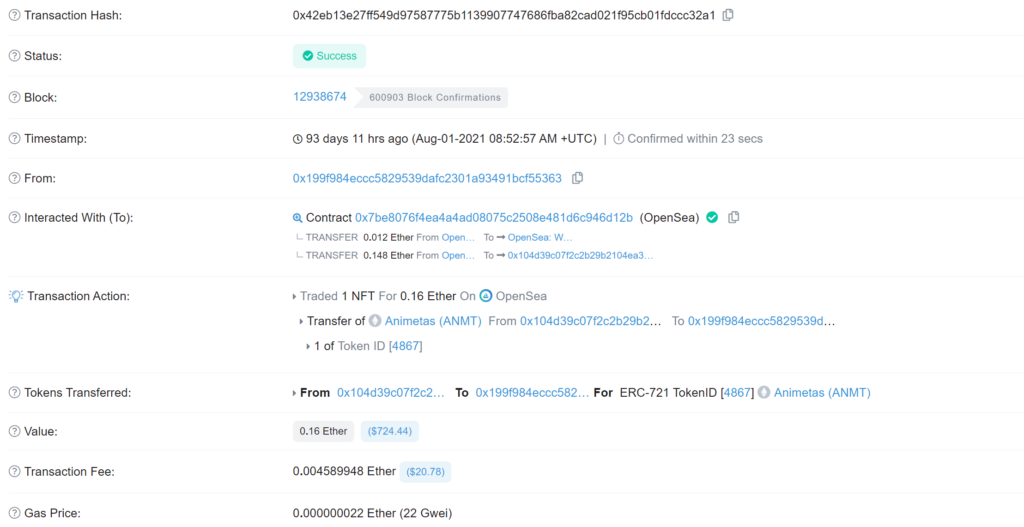
NFT has been running on the Ethereum blockchain since 2017. This means that the token cannot be forged, stolen or altered. The blockchain system has proven itself to be one of the most transparent, secure systems in the world. You can safely see the entire history of a token in the system.
ᅠ
NFTs that are traded on specialized marketplaces can be divided into two main groups. The first is NFT, the value of which is based on a person’s belief that this token is worth something. The second is the result of the creativity of an artist, an artist, a writer. There are so many people creating all sorts of tokens today. Images, 3D models and so on. But they are not a piece of art and have no cultural or artistic value. But people believe that this object, this picture has a certain value analogous to cryptocurrency. Artists’ works can have value as a work of art, can be an object of study and admiration. Many digital works of art can be used virtually and in the real world. Their value can be appreciated like works of art existing in the physical world. Already now there are exhibitions devoted to virtual art that are popular with visitors.
ᅠ
As an example, consider the picture of the artist Beeple sold at auction Christies in March 2021 for 69.346.250 dollars.
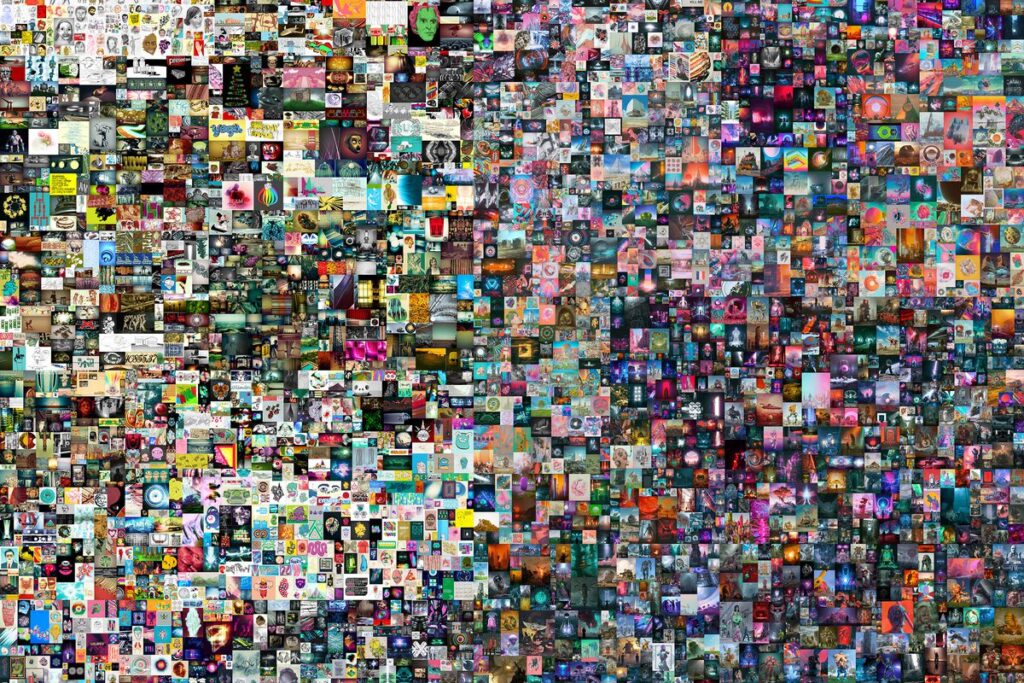
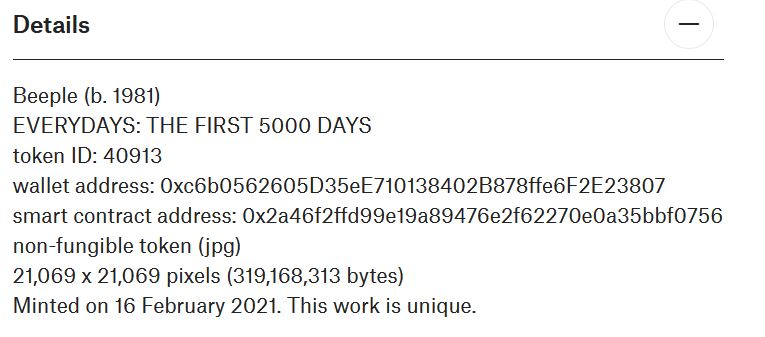
In EVERYDAYS: THE FIRST 5000 DAYS, the artist has stitched together recurring themes and color schemes to create an aesthetic whole. Organized in loose chronological order, zooming in on individual pieces reveals abstract, fantastical, grotesque, and absurd pictures, alongside current events and deeply personal moments. Society’s obsession with and fear of technology; the desire for and resentment of wealth; and America’s recent political turbulence appear frequently throughout the work.
The notable difference between the pictures from Day 1 (1 May 2007) and Day 5,000 (7 January 2021) reveals Beeple’s immense evolution as an artist. At the project’s inception, EVERYDAYS consisted of basic drawings. Once Beeple started working in 3D, they took on abstract themes, color, form and repetition. In the last five years, however, his digital pictures have became increasingly timely, often reacting to current events.
ᅠ
For comparison, consider the example of a mass token.
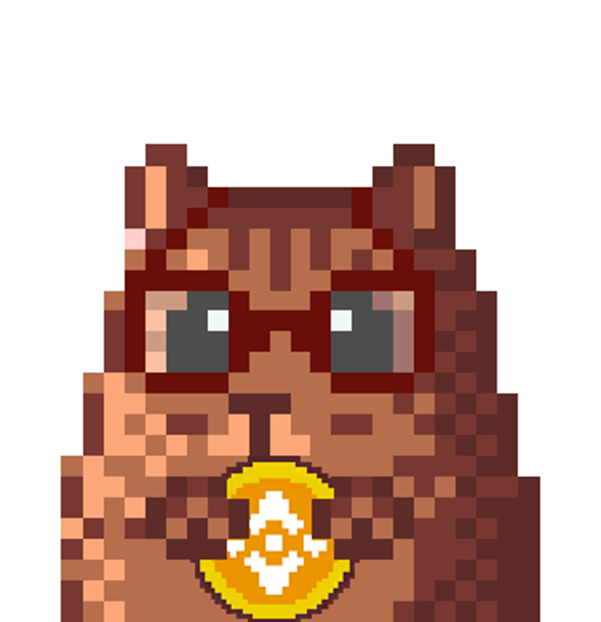
All hamsters are unique. Each symbolizes a different owner of the cryptocurrency. Current price of this token is $168,95, but so far no one has bought this token.
ᅠ
As you can see, there is a big difference between the two types of NFTs. Nevertheless, mass NFTs are also finding their buyers.
ᅠ
We believe that investing in NFTs will grow. But you have to invest wisely, especially in mass NFT, most of which will be worthless.